

When traditional research methods broke under the weight of 60,000 consumer interviews, Russell Evans and his team at ZS didn't just find a workaround. They rebuilt the entire approach to consumer insight.
The result was Atlas - an AI-powered platform that extracts insights from the signal trails consumers leave across digital spaces.
But the more interesting story is how they built it, and what that reveals about innovation, adoption, and the intersection of expertise and technology.
Whether you're leading innovation inside an organization, advising brands on strategy, or building products, Russell's journey offers clear frameworks you can apply.
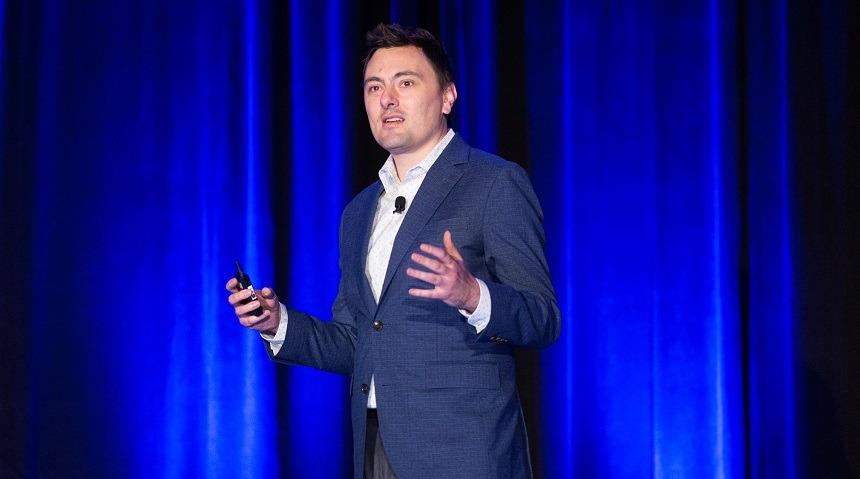
Russell Evans, Principal @ ZS
[links to our full podcast episode at the end of this edition]
The Unknown Unknown Problem
Here's a story that captures the opportunity most organizations miss:
A marshmallow manufacturer engaged ZS for consumer insights. The assumption going in was straightforward - validate some product improvements, understand basic usage patterns.
What Atlas surfaced instead: people were keeping mini bags of marshmallows in their cars specifically as coffee sweetener.
Not as a snack. As sweetener.
The logic was clear once you saw it:
- They're shelf-stable
- Going stale doesn't matter when you're dropping them in hot coffee
- They dissolve perfectly
- They were solving a need that liquid sweeteners, sugar packets, and artificial alternatives weren't
No one at the brand knew this use case existed. No one on the consulting team thought to ask about it.
But it was sitting in plain sight across product reviews, social posts, and consumer forums.
Russell calls this the "unknown unknown" - insights you would never think to ask about, but consumers have already told you if you know where to look.
Why This Matters
Traditional research is constrained by what you think to ask.
You design surveys around hypotheses.
You recruit focus groups based on known segments.
You validate concepts you've already imagined.
But some of the highest-value insights exist outside that frame entirely.
They're the unexpected use cases, the workarounds consumers have already invented, the needs being solved in ways you never designed for.
The strategic question becomes: What signal trails exist in your domain that no one is systematically reading?
Organic evidence people leave when they're solving real problems:
- Product reviews that mention unexpected applications
- Reddit threads where your audience discusses workarounds
- Support tickets revealing persistent friction
- Social media posts showing how people actually use things
- E-commerce Q&A sections full of creative use cases
These signals are always being generated. The competitive advantage goes to whoever builds the capability to extract insight from them at scale.
Building Expertise Into the System
Most AI implementations in enterprise right now follow a similar pattern: data goes in, outputs come out, and the methodology in between is largely opaque.
Russell took a fundamentally different approach with Atlas: encode decades of consulting expertise directly into how the system processes information.
Here's how that actually works:
Curated Inputs
Not a fire hose of internet data. The team:
- Identifies which data sources are relevant for specific questions
- Filters to appropriate populations
- Cleans and weights data to ensure representativeness
- Corrects for demographic skews
The expertise is in knowing what to look for and where to find it.
Structured Extraction
The AI doesn't just count mentions or generate word clouds. It extracts insights into frameworks businesses actually use to make decisions:
- Consumer needs hierarchies
- Usage occasions and contexts
- Feature importance and attribute preferences
- Category dynamics and competitive gaps
This isn't AI inventing frameworks. It's AI applying frameworks that consultants have refined over decades of practice.
Decision-Ready Outputs
The deliverable isn't "here's what people said." It's:
- Opportunity sizing: how big is each identified need?
- Segmentation: which consumer groups want different things?
- Vulnerability analysis: where are current offerings falling short?
- Actionable recommendations: what to build, for whom, and why
Every output is designed to accelerate a specific business decision.
Expert Validation
Consultants with domain expertise guide the queries, validate patterns, and interpret results. The AI dramatically speeds up extraction and analysis. Humans ensure the insights are accurate, contextually relevant, and strategically useful.
Why This Architecture Matters
For innovation leaders: When you're integrating AI into your process, the question isn't "can AI do this task?"
The question is: "What's the expertise that makes this valuable, and how do we encode it into the approach?"
If your competitive advantage is human judgment, don't automate it away. Build it into how the system works.
For consultants and advisors: Your value isn't just having access to better tools. It's knowing how to set them up, what to ask, how to interpret results, and how to translate insights into strategy.
The AI should amplify your expertise, not replace it.
The Service vs. Tool Pivot
When Russell's team first built Atlas, they envisioned it as a platform - something clients would license and use themselves.
Early market feedback was clear: "We already have too many tools. Just give us the answers."
The pivot: Instead of primarily selling the platform, offer it as part of the enhanced value proposition of their already exceptional service. ZS consultants use Atlas to deliver insights faster and at higher quality. Clients get outcomes, not another system to learn.
The Business Model Lesson
This tension shows up across innovation right now:
If what you're building requires expertise to interpret, contextual knowledge to apply, or judgment to act on - you might not have a product, you might have a service enabled by technology.
Questions to ask:
- Does the output require domain expertise to interpret correctly?
- Do users need significant training to extract value?
- Is the insight more valuable with expert curation than raw access?
- Are clients hiring you for the tool or for what you do with it?
Sometimes the technology is the capability that lets you deliver a transformationally better service. The business model is the service, not the tech itself.
This is especially relevant for consultants and agencies exploring how AI changes their value proposition. The answer often isn't "we now offer a tool." It's "we can now deliver outcomes that weren't previously possible."
Speed vs. Organizational Capacity
When Russell's team demonstrated to Hershey that they could complete work in days that traditionally took months, the response surprised them:
"That's great - but our people need time to be involved in the process."
This is one of the most underestimated challenges in innovation right now: you can build faster than organizations can adopt.
The bottleneck isn't technical capability. It's change management, stakeholder alignment, and the human need to feel involved in decisions.
For Intrapreneurs and Innovation Leaders
If you're innovating inside a large organization:
Prove value side-by-side first. Russell's approach: "Take your existing process, run both approaches in parallel, and compare outcomes." Let the results build trust before asking people to abandon their existing methods.
Build in time for participation. Even if AI can generate concepts in seconds, stakeholders need time to review, discuss, and feel ownership. Design your process to include human decision points, not bypass them.
Frame it as augmentation, not replacement. People resist when they feel automated away. They adopt when they feel empowered to work at a higher level.
Respect existing stage gates. Don't fight the bureaucracy head-on. Show how your approach can accelerate or enhance what's already there, then gradually reshape the process as trust builds.
For Consultants Advising Clients
Your role increasingly includes helping clients adopt innovation at a pace they can actually absorb:
- Identify where to inject speed (insight generation, concept testing) vs. where to maintain existing pace (stakeholder alignment, decision-making)
- Design adoption paths that respect organizational capacity
- Build transition plans that don't require people to change everything at once
- Create proof points that make the case for broader adoption
Speed is valuable. Sustainable adoption is more valuable.
Product Development: Assembly Over Invention
Traditional product development follows a well-worn path:
- Brief the team on business objectives
- Brainstorm potential solutions
- Develop concepts
- Test concepts through stage gates
- Refine based on feedback
- Launch and hope consumers respond as predicted
This process has substantial failure rates. Products that test well in research often underperform in market. Consumers say they'd buy something, then don't.
Russell's team rebuilt the approach around a different principle: design products by assembling "Lego blocks" you already know consumers value.
How It Works
Atlas identifies at a granular level:
- Specific needs consumers have in a category
- Features that matter and why
- Attributes that drive preference
- Usage occasions that create value
- Language and positioning that resonates
With this foundation, generative AI can rapidly assemble new product concepts that are pre-optimized around elements consumers have already validated.
It's not brainstorming from scratch. It's intelligent recombination of components you know work.
The Results
When ZS compares products designed through this approach versus traditional human-led development, the difference is significant enough that Russell says: "The outcomes are so superior it's not even really a question anymore for us."
Why? Because you're not asking consumers to predict whether they'd buy a novel concept. You're assembling things they've already told you they want, just in new combinations.
Applying This Framework
For product leaders:
Map the components of value in your category:
- What are the core jobs-to-be-done?
- What features solve which jobs?
- What attributes matter for different use cases?
- What combinations exist vs. what's missing?
Your innovation opportunity might not be inventing something entirely new. It might be assembling known valuable elements in a way no one has yet.
For strategists and advisors:
Help clients shift from "what should we invent?" to "what combination of things people already value is missing from the market?"
This is a fundamentally different - and often more productive - framing of the innovation challenge.
Intrapreneurship in a 14,000-Person Firm
One of the most valuable parts of this conversation was hearing about building something new inside a large, established organization.
ZS is a 14,000-person global consulting firm with an entrepreneurial culture, but that doesn't eliminate the real challenges of intrapreneurship:
Funding isn't automatic. Russell still had to make the case for resources repeatedly, prove ROI, and compete for budget against other priorities.
Client needs shape the roadmap. As a services firm, it's difficult to say no when a client requests something that pulls you off your planned direction. The product roadmap has to stay flexible.
Internal dependencies matter. When another team decides to change the tech stack, that affects your build. When there are firmwide initiatives, your project needs to align or adapt.
Success metrics are multi-dimensional. Revenue from the capability matters, but so does: enabling colleagues across the firm, generating thought leadership, deepening client relationships, and building strategic differentiation.
What Makes It Work
Clear customer focus. Russell stayed laser-focused on the needs of consumer insight professionals and brand innovation leaders. That clarity helped cut through competing priorities.
Proof through results. Showing clients side-by-side comparisons of outcomes built credibility faster than pitching the approach.
Collaborative development. Russell emphasized how critical his colleagues at ZS were throughout - people who contributed expertise, challenged assumptions, and helped refine the capability. Innovation at this scale is never solo.
Patience with adoption. Building the capability was one challenge. Helping the firm adopt it broadly was another. Both required sustained effort over years, not months.
For Anyone Innovating Inside Organizations
The constraints aren't bugs, they're features. They force you to:
- Stay tightly focused on real customer needs
- Prove value continuously, not just at launch
- Build collaboratively and give credit generously
- Design for adoption, not just capability
These disciplines often produce better, more sustainable innovation than unlimited resources and autonomy would.
From Pilots to Integration
Russell recently attended an industry conference for insights professionals. For the past two years, these events have been dominated by a fire hose of new AI capabilities - every session showing something no one had seen before.
This conference was different.
The conversation shifted from "look at this new thing" to "how do we actually integrate this and change how our teams work?"
Organizations are moving from:
- A portfolio of pilots
- To: choosing which bets to commit to and fundamentally changing processes around them
Why This Shift Matters
For technology providers:
Your buyers aren't looking for more capabilities to test. They're looking for solutions worth changing their operations for.
That means your job includes:
- Demonstrating clear ROI quickly
- Making the adoption path obvious
- Helping clients change processes, not just add tools
- Proving it works alongside or better than current methods
For innovation leaders:
The era of "let's pilot everything" is ending. It's time to:
- Choose which AI capabilities actually deliver value in your context
- Commit to changing processes around them
- Train teams to work differently
- Measure actual business impact, not just capability
For consultants and advisors:
Your clients need help with the integration challenge now, not just the technology evaluation.
How do you:
- Redesign workflows to take advantage of new capabilities?
- Train teams to work in new ways?
- Manage change and build adoption?
- Prove ROI and build executive support for broader rollout?
This is where the strategic value is shifting.
Three Principles
I always end episodes by asking: What does everyday innovation mean to you?
Russell's answer:
1. Low tolerance for annoyance
When something is painful, slow, or inefficient, don't accept "that's just how it is."
Russell: "There's gotta be a better way to do this. This is silly."
That frustration is a signal. It often points to your next innovation opportunity.
2. Self-belief tempered with self-awareness
You need enough conviction to think "maybe I can solve this" even when others have tried and struggled.
But pair that with honest assessment of your weaknesses and gaps.
3. Build with people who complement you
Throughout our conversation, Russell credited colleagues, teams across ZS, and his family for making this possible.
The solo genius myth is fiction. Sustainable innovation is collaborative.
Key Takeaways
On finding opportunities:
- Unknown unknowns are your competitive edge
- Signal trails are being generated constantly - build capability to read them
- Some of the highest-value insights exist outside your current frame
On building with AI:
- Encode expertise into the system, don't automate around it
- Curation + interpretation is where the value is, not just access to data
- Design for expert-in-the-loop, not fully automated
On business models:
- If your tool requires expertise to use well, you might have a service business
- Technology can be the capability that enables transformational service delivery
- Sometimes the product is the outcome, not the platform
On adoption:
- You can build faster than organizations can absorb
- Prove value side-by-side before asking people to abandon existing methods
- Design for human participation, not just AI speed
- Help people feel augmented, not replaced
On product development:
- Map the Lego blocks of value in your domain
- Innovation is often intelligent recombination, not pure invention
- Design from components you know consumers value
On intrapreneurship:
- Constraints force focus and discipline
- Prove results continuously, not just at launch
- Give credit generously and build collaboratively
- Design for adoption, not just capability
On the market shift:
- We're moving from pilots to integration
- The challenge is changing how teams work, not just adding tools
- Strategic value is in helping organizations adopt and transform
Connect with ZS
ZS: zs.com
Atlas Intelligence: zsatlasintelligence.com
🎧 Watch/Listen to the full conversation:
Spotify
YouTube
Apple
Enjoyed this episode?
Leave a review on Apple Podcasts or Spotify, or follow on YouTube for more conversations with founders and innovators.
New: Signal Sprint Session for Founders + Innovation Leaders
Jordan is currently taking on select 1:1 clients for venture design and innovation systems sessions.


